



Cape Coral envisions a future where pedestrians, e-bikes, golf carts, cars, buses, scooters, ferries — and possibly one day even streetcars or air taxis — move seamlessly through the city. A new long-term transportation study outlines that developers will help fund this vision by paying “mobility fees” that could be 200% to 300% higher than the city’s current impact fees for homes, churches, gas stations or other types of construction.
The suggested new fees are so steep because they haven’t been updated in some two decades, city staff said. Still, they came as sticker shock to some participants at a public workshop July 9 to discuss the study, with one member of the public commenting: “The fees have to increase but at the same time it’s going to completely stifle new development in Cape Coral.”
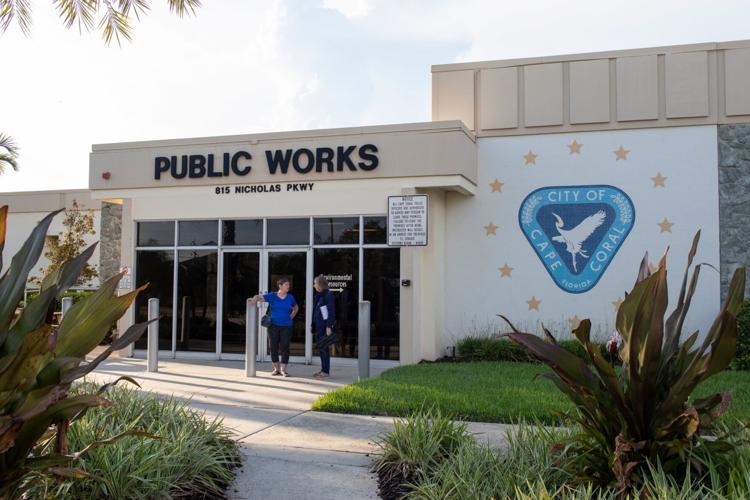
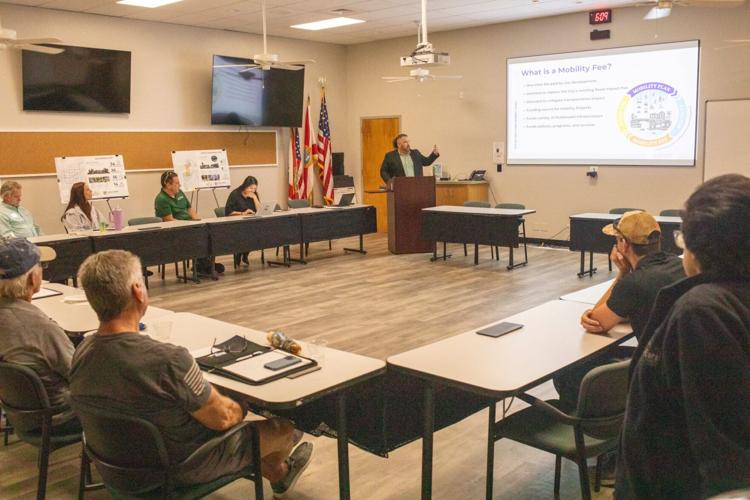
Cape officials commissioned the Cape Coral Mobility Study by the Florida urban planning firm Nue Urban Concepts. At the workshop at the Cape’s Public Works Center, several dozen residents, city staff and officials gathered to hear Nue Urban’s presentation of the study for the first time. It maps out transportation planning in the Cape over 20-plus years as the city expands.
Jonathan Paul, Nue Urban founder and principal, and transportation engineer Uyen Dang presented a vision that incorporates nearly every way a person might get around in the Cape. Finding a way for all of them to co-exist safely while reducing congestion will be one of the city’s major challenges.
“It’s not a wish list,” said Bill Corbett, the Cape’s assistant public works director and chief engineer. “It’s a needs-based plan. All of these things are inevitable at some point in the future.”
The study found that meeting the city’s future needs might require improvements such as building potentially 55 roundabouts at key intersections, 2 miles of new roads and 85 miles of Complete Streets roadways that would mean widening sidewalks and creating on-street parking, traffic calming features, bike lanes and other improvements on existing streets.
The study looked at the potential for eight ferry stops to transport people by water, on-demand ride services and eight “mobility hubs” that serve as central points of contact for all types of transportation.
New mobility fees are designed to replace the city’s existing road impact fees, based in part on the impact any given development will have on transportation infrastructure. A two-bedroom home, for example, generates fewer trips than a drive-thru restaurant.
The fees would be levied at the time developers receive a permit and differ depending on their location in the south, central or northern Cape.
Nue Urban’s presentation included a list of 36 cities and counties throughout Florida that have implemented similar plans to meet the needs of growing communities.
A second public workshop to discuss the plan is scheduled for July 23. Nue Urban’s Mobility Study and Plan, and more information on how it may be implemented, can be found here.
Potential new mobility fee examples
According to Nue Urban’s study, the developer for a single-family residential home would pay between $3,395 (in the South Cape) and $7,489 (in the North Cape) per 1,000 square feet.
The developer for a new hotel would pay between $3,728 and $8,243 per room.
A car repair shop would cost between $9,654 and $18,252 per bay or stall.
A bank, grocery store or sit-down eatery would cost between $21,388 and $48,462 per 1,000 square feet.
A gas station or drive-thru would cost from $32,518 to $73,680 for each 1,000 square feet of space.
An arts center, church or civics club would cost between $3,223 and $6,800 per 1,000 square feet while a grade school would cost between $3,239 and $8,201.
A small private airport would cost between $9,065 and $17,784 per 1,000 square feet, and a VertiPort development designed to handle electric aircraft would cost between $2,354 and $4,619 per space.
(0) comments
Welcome to the discussion.
Log In
Keep it Clean. Please avoid obscene, vulgar, lewd, racist or sexually-oriented language.
PLEASE TURN OFF YOUR CAPS LOCK.
Don't Threaten. Threats of harming another person will not be tolerated.
Be Truthful. Don't knowingly lie about anyone or anything.
Be Nice. No racism, sexism or any sort of -ism that is degrading to another person.
Be Proactive. Use the 'Report' link on each comment to let us know of abusive posts.
Share with Us. We'd love to hear eyewitness accounts, the history behind an article.